
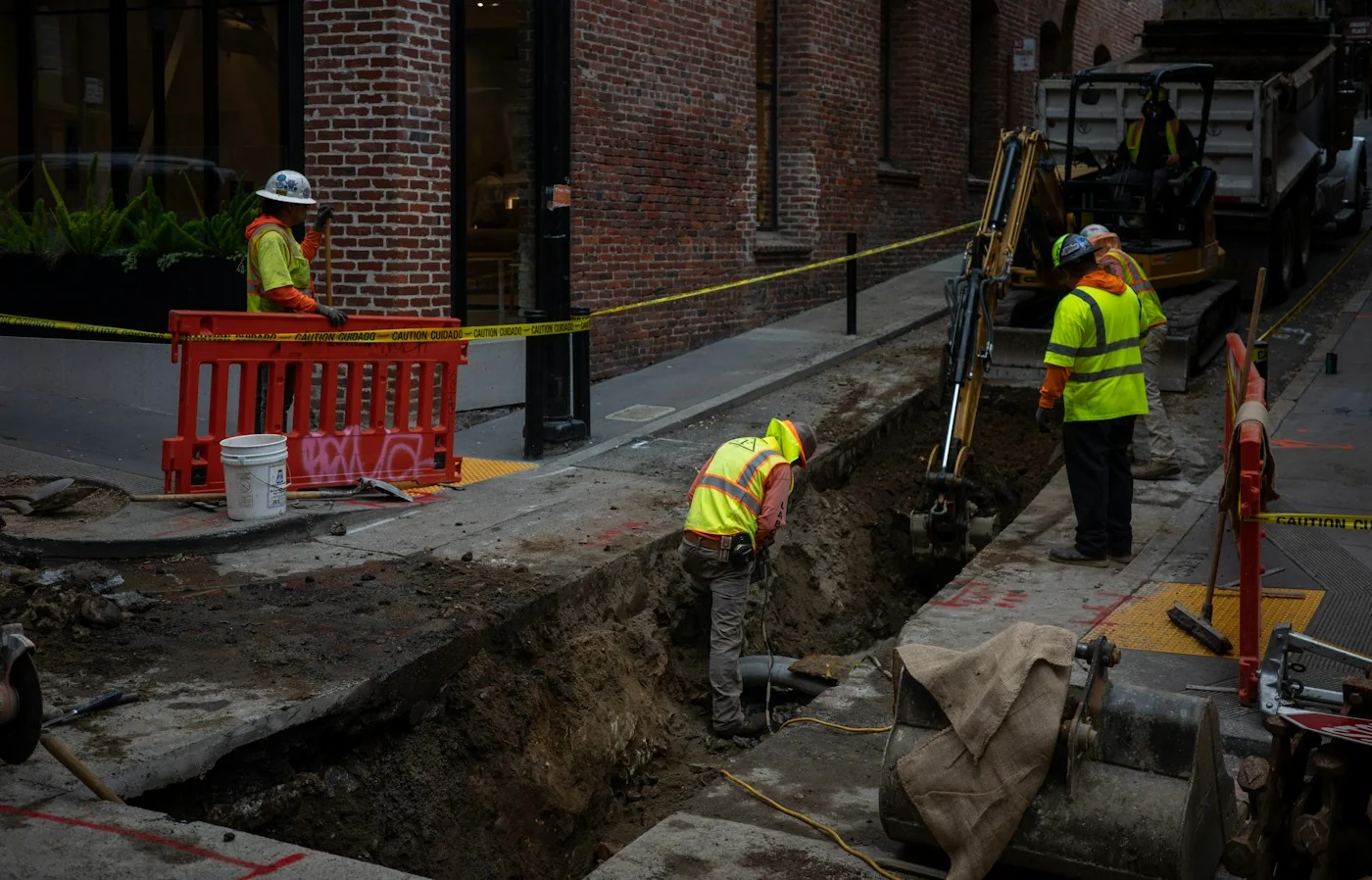
Common Sanitary Sewer Problems in Cleveland Homes and Businesses
Sanitary sewer lines carry wastewater from toilets, sinks, showers, and other plumbing fixtures toward the municipal sewer system or a private wastewater treatment system. When these pipes become blocked or damaged, wastewater may have nowhere to go.
Many Cleveland properties have aging underground plumbing infrastructure, making sewer line condition an important consideration when recurring drainage problems develop. Common issues include:
Tree Root Intrusion
Tree roots naturally seek moisture and can enter sewer pipes through small cracks, loose joints, or other openings. Once inside, roots may continue growing and trap toilet paper, grease, and debris, eventually restricting wastewater flow.
Removing the roots may temporarily restore drainage, but damaged pipe joints or cracks may require repair to reduce the likelihood of another blockage.
Cracked, Collapsed, or Deteriorating Sewer Pipes
Underground sewer lines can deteriorate over time due to age, corrosion, shifting soil, and repeated ground movement. Older clay or cast-iron pipes may be particularly vulnerable to cracking, joint separation, or deterioration.
A damaged section can restrict flow, allow soil into the line, or eventually collapse. Depending on the severity of the damage, targeted sewer pipe repair or replacement may be necessary.
Grease, Debris, and Waste Buildup
Grease, cooking oils, wipes, paper products, and other materials can accumulate inside sewer lines. Even items labeled as flushable may contribute to blockages.
As buildup narrows the pipe, wastewater drains more slowly and may eventually back up into the building. Professional cleaning can remove many obstructions, although recurring problems may indicate an underlying pipe defect.
Sewer Line Bellies and Misaligned Pipes
A sewer line belly occurs when part of an underground pipe sags, creating a low section where wastewater and solids can collect. This can happen due to shifting soil, inadequate support, or improper installation.
Misaligned pipe connections can cause similar drainage problems. Because cleaning does not correct the pipe's slope or alignment, these conditions may require structural repairs.
Warning Signs You May Need Sewer Line Repair
Sewer problems often develop gradually before a major backup occurs. Recognizing the warning signs can help property owners arrange an inspection before the damage becomes more extensive.
Look for the following symptoms:
- Multiple slow drains: When several sinks, tubs, or toilets drain poorly at the same time, the obstruction may be located in the main sewer line.
- Recurring sewer backups: Wastewater repeatedly backing up into toilets, tubs, or basement floor drains can indicate a persistent blockage or pipe defect.
- Gurgling plumbing fixtures: Bubbling or gurgling sounds after flushing a toilet or running water may indicate restricted drainage or an airflow problem within the plumbing system.
- Sewer odors: Persistent sewage smells near drains or in the basement may indicate a drainage, venting, or sewer system issue that needs investigation.
- Unusually wet areas of the yard: Soft ground, persistent dampness, or unexpected patches of lush grass near an underground sewer line may indicate leakage.
- Frequent drain cleaning needs: If the same blockage keeps returning, removing debris alone may not address the underlying cause.
Not every slow drain requires sewer repair. However, when multiple fixtures are affected or symptoms repeatedly return, a professional inspection can help determine whether the problem is isolated or related to the main line.
Our Sanitary Sewer Inspection and Repair Process
The right sewer repair starts with understanding what is happening inside the pipe. Reliable Basement & Drain evaluates the symptoms, drainage history, and condition of the affected system before recommending a repair approach.
1. Identify the Source of the Problem
We begin by reviewing the symptoms and determining which fixtures or drains are affected. Whether wastewater is backing up into a basement floor drain or several fixtures are draining slowly, identifying the pattern helps narrow down the possible source.
2. Inspect the Sewer Line
When appropriate, a sewer camera inspection allows technicians to examine accessible sections of the underground line without immediately excavating the property.
Video inspections can help identify tree root intrusion, heavy buildup, cracks, separated joints, standing water, and other visible pipe conditions. The findings help determine whether cleaning, additional investigation, or structural repair is needed.
3. Review Cleaning and Repair Options
Once the issue is identified, we explain the available solutions based on the pipe's condition, accessibility, and extent of the damage.
A localized obstruction may only require cleaning, while a collapsed pipe or severely deteriorated section may need excavation or replacement.
4. Complete the Recommended Work
After you approve the recommended service, our team can address the problem using the appropriate cleaning or repair method.
We focus on resolving the identified issue and explaining any additional maintenance or repairs that may help reduce future sewer problems.
Sanitary Sewer Cleaning, Repair, and Replacement Options
Not every sewer problem requires a complete pipe replacement. The most appropriate solution depends on whether the issue involves an obstruction, structural damage, or widespread deterioration.
Sewer Line Cleaning
When grease, roots, waste, or debris restricts the flow of wastewater, professional sewer line cleaning may restore proper drainage.
Mechanical drain cleaning and high-pressure drain jetting can address different types of obstructions. The best method depends on the blockage, the pipe material, and the condition of the line.
If the pipe is cracked, offset, or deteriorating, additional repairs may be needed even after the obstruction is cleared.
Targeted Sewer Pipe Repairs
When damage is limited to a specific section, it may be possible to repair or replace that portion without replacing the entire sewer line.
Localized repairs may address cracked pipes, separated connections, or collapsed sections. Excavation may be required to access the damaged area, depending on its location and the available repair options.
Trenchless Sewer Line Replacement
For qualifying sewer systems, trenchless replacement methods can reduce the amount of extensive excavation required compared with traditional open-trench replacement.
These methods may be appropriate for certain damaged or aging underground pipes, but suitability depends on factors such as existing pipe condition, alignment, access, and the replacement method.
When significant damage is found, our team can help determine whether a trenchless approach or traditional excavation is more appropriate.
Sewer Backups in Cleveland Basements
A sewage backup in the basement requires prompt attention, particularly when contaminated water is entering finished rooms, laundry areas, or storage spaces.
Because basement floor drains are often among the lowest drainage points in a building, they may be the first place wastewater appears when a main sewer line becomes obstructed.
During periods of heavy rainfall, excess water entering the sewer system can also contribute to backup problems in some areas. However, a basement backup does not automatically mean the municipal sewer is responsible. A blockage in the property's sewer lateral, damaged piping, or another drainage issue may be the cause.
If sewage is backing up into your basement:
- Stop using toilets, sinks, washing machines, and other plumbing fixtures to avoid sending additional wastewater into the affected line.
- Keep children and pets away from contaminated water.
- Avoid contact with sewage and do not operate electrical equipment in flooded areas.
- Contact a sewer service professional to investigate the problem.
Reliable Basement & Drain can help determine whether the issue involves a blockage, damaged sewer piping, or another drainage concern.
When Is a Sewer Backup an Emergency?
A sewage backup requires prompt attention, especially when wastewater enters your basement, overflows from plumbing fixtures, or affects multiple drains throughout your property. Sewage exposure can create health hazards and cause extensive damage to flooring, walls, and personal belongings.
If sewage is actively backing up, stop using toilets, sinks, and other plumbing fixtures to avoid adding more wastewater to the affected line. Keep children and pets away from contaminated areas, and contact a professional for an inspection. Reliable Basement & Drain can help identify whether the problem involves a severe blockage, damaged sewer piping, or another drainage issue.
Sanitary Sewer Repair FAQs
How do I know if my main sewer line is clogged?
Common signs include several drains backing up at once, gurgling toilets, recurring sewage odors, and wastewater appearing in a basement floor drain. A single slow sink may have a localized clog, but problems affecting multiple fixtures can indicate a blockage farther down the system.
Can tree roots damage a sanitary sewer line?
Yes. Roots can enter through existing cracks or loose pipe joints, expand inside the sewer line, and contribute to blockages. Root removal may restore wastewater flow, but repairing damaged pipe sections may be necessary to reduce recurring intrusion.
Does a sewer backup always mean the pipe needs replacing?
No. Many backups are caused by removable obstructions such as grease, roots, or accumulated debris. Replacement is generally considered when inspections reveal severe deterioration, collapse, major misalignment, or other structural conditions that cannot be adequately addressed through cleaning or localized repair.
What is the difference between sewer cleaning and sewer repair?
Sewer cleaning removes blockages or buildup to restore wastewater flow. Sewer repair addresses physical pipe defects such as cracks, broken joints, collapsed sections, or damaged connections. In some cases, both services are necessary.
Can a sewer camera inspection detect damaged pipes?
A sewer camera can reveal many visible defects, including cracks, root intrusion, standing water, separated joints, and some collapsed or obstructed sections. However, severe blockages may prevent the camera from reaching the entire line, and some conditions may require additional investigation.
Who is responsible for repairing the sewer line between my home and the street?
Responsibility for sewer line repairs depends on where the damage occurs and local utility requirements. In many cases, homeowners are responsible for maintaining the private sewer lateral connecting their property to the public system. A sewer camera inspection can help identify the damaged section, while the appropriate Cleveland sewer authority can clarify maintenance responsibilities.
How quickly can I schedule sanitary sewer service?
Scheduling depends on the urgency of the problem and current availability. Contact Reliable Basement & Drain at (440) 324-2380 to discuss your situation and the next available appointment. If wastewater is actively backing up into your property, let the team know when you call.
Schedule Sanitary Sewer Repair in Cleveland, OH
Recurring sewer backups, damaged underground pipes, and persistent drainage problems can lead to expensive property damage if left unaddressed. Reliable Basement & Drain helps Cleveland homeowners and businesses identify sewer line problems and find practical, long-term solutions.
Whether the problem involves tree roots, deteriorated pipes, or recurring sewer backups, our team evaluates the condition of the line before recommending a solution. From removing blockages to repairing damaged underground sections, we help Cleveland property owners address sewer problems based on the cause and extent of the damage.
Call (440) 324-2380 or request a free quote today to schedule sanitary sewer service.